
India Post GDS Recruitment 2026 has just entered its second engagement cycle of the year, and it’s shaping up to be one of the largest 10th-pass government job opportunities currently on the table — the Department of Posts released its short notice for GDS Online Engagement Schedule-II (July-2026) on 20 August 2026, with early estimates pointing to more than 21,000 vacancies for Branch Postmaster, Assistant Branch Postmaster, and Dak Sevak posts across the country. If you’ve been waiting for another round after the January 2026 cycle closed, this is it.
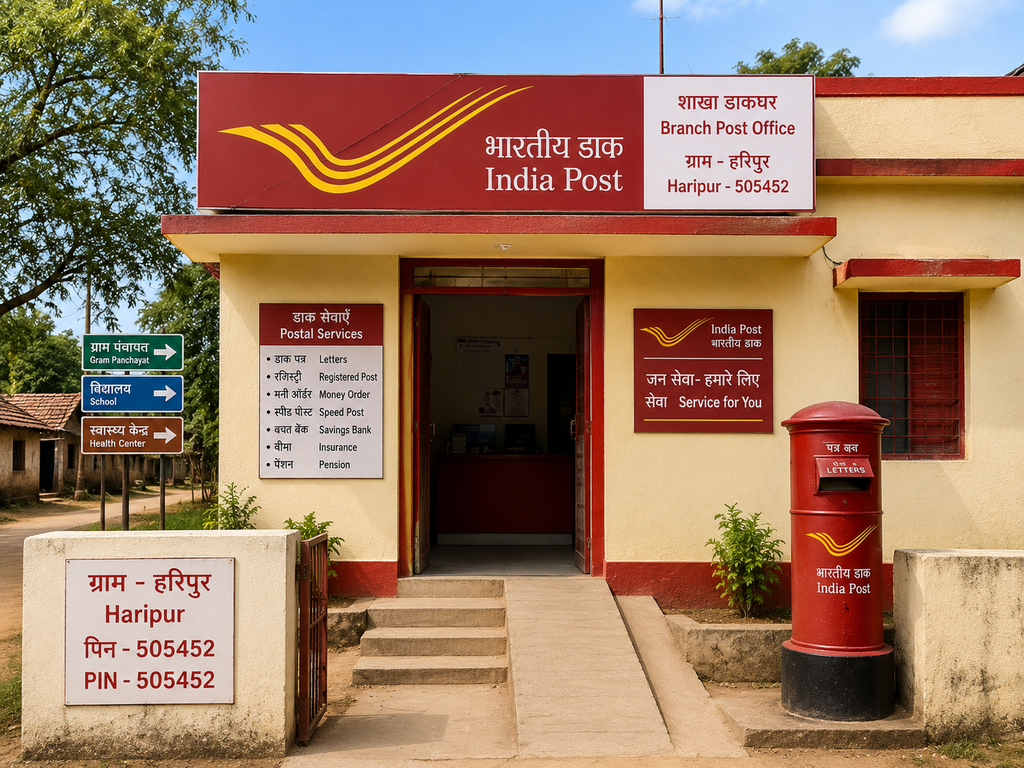
What continues to make the GDS recruitment process worth prioritizing over many other 10th-pass notifications is how refreshingly simple the selection method is: there’s no written exam, no interview, and no physical test anywhere in the process. Your 10th-class marks alone decide your merit position, and a fully automated, system-generated list does the shortlisting — no human discretion involved at any stage. This guide walks through exactly what’s confirmed so far, the full engagement schedule, eligibility, salary by post, and what still needs to be finalized when the detailed notification drops.
Table of Contents
About This Recruitment Cycle
The Department of Posts, under the Ministry of Communications, Government of India, runs Gramin Dak Sevak (GDS) recruitment through periodic online “engagement” cycles rather than a single annual notification. The most recent cycle, GDS Online Engagement Schedule-I (January 2026), concluded on 22 July 2026 after filling 28,636 notified vacancies. Almost immediately after, the Department began preparatory work for the next round, and on 20 August 2026, it issued the short notice confirming GDS Online Engagement Schedule-II, July-2026.
This is a contractual engagement, not a traditional permanent government job appointment in the classic sense — GDS positions operate under their own distinct service rules, though they remain a stable, long-term earning opportunity within the postal system with defined allowances and a structured career path.
Why This Is Called “Schedule-II”
The Department labels each recruitment round by year and sequence — “Schedule-I, January-2026” was the first cycle of the year; this one, “Schedule-II, July-2026,” is the second. The vacancies notified under this cycle will reflect the staffing position as on 30 June 2026, and specifically include:
- Vacancies created by resignation, transfer, voluntary discharge, termination, dismissal, promotion, or long-term deputation (over six months) to IPPB or the Army Postal Service
- Unfilled posts from Schedule-I where selected candidates didn’t join, or resigned shortly after joining
- Vacancies arising from the GDS Limited Transfer Facility (May 2026 cycle), regardless of the 30 June cut-off
- Posts declared or proposed to be declared surplus
- Certain death-related vacancies, excluded where reserved for compassionate engagement
Vacancy Estimate
The Department’s short notice does not yet confirm an exact vacancy figure — that detail arrives with the full descriptive notification. Based on preparatory circulars and early circle-level reporting, current estimates place the total at over 21,000 vacancies, with some sources projecting the figure could approach 25,000 once all circles finalize their submissions. Treat this as a working estimate rather than a confirmed number until the detailed notification is published.
Posts on Offer
Three GDS post categories are covered under this notification:
| Post | Role Overview |
|---|---|
| Branch Postmaster (BPM) | Heads a Branch Post Office, handling all postal, banking, and administrative operations at that branch |
| Assistant Branch Postmaster (ABPM) | Supports BPM operations, including mail delivery and account-related duties |
| Dak Sevak | Handles mail delivery, conveyance, and related postal support duties, typically at Departmental Sub Post Offices |
Eligibility Criteria
- Educational Qualification: Pass in 10th class (Matriculation) from a recognized Board.
- Compulsory local language knowledge: You must have studied the local language of the specific state/circle you’re applying to as a subject at the 10th class level — not just conversational fluency, but a documented academic subject on your SSC record.
- No specific computer knowledge certificate is mandated at the entry stage under this notification’s basic eligibility, though the detailed notification should be checked for any circle-specific additional requirements.
The local language requirement is worth emphasizing because it’s a hard eligibility filter, not a preference — if the specific state/circle’s local language wasn’t a subject you studied in 10th class, you aren’t eligible to apply under that circle, regardless of how fluently you speak it.
The Local Language Requirement
This detail deserves its own explanation because it directly shapes which circle you should apply to. If you’re targeting a Telugu-speaking circle (Andhra Pradesh or Telangana), Telugu needs to appear as a subject on your 10th class marksheet — simply being a native or fluent Telugu speaker without it appearing academically on your certificate does not satisfy this requirement. Before deciding which circle to apply under, check your own 10th marksheet for exactly which language subject is recorded there.
Age Limit and Relaxations
| Category | Maximum Age |
|---|---|
| General/UR | 40 years |
| OBC | 43 years |
| SC/ST | 45 years |
| PwBD (Persons with Disabilities) | 50 years |
The minimum age for all categories is 18 years. Since GDS recruitment doesn’t specify a single fixed reference date the way exam-based recruitment does, always confirm the exact age-calculation date once the detailed notification is published, since this can shift slightly cycle to cycle.
Salary by Post
| Post | Basic TRCA (Time-Related Continuity Allowance) | Approx. Gross with Allowances |
|---|---|---|
| Branch Postmaster (BPM) | ₹12,000 – ₹29,000 | Approx. ₹17,000 – ₹18,000 |
| Assistant Branch Postmaster (ABPM) / Dak Sevak | ₹10,000 – ₹24,000 | Approx. ₹16,000 |
GDS positions are compensated through a Time-Related Continuity Allowance (TRCA) structure rather than a standard fixed government pay scale, with Dearness Allowance and other allowances added on top of the base TRCA figure. These are approximate ranges reported alongside the cycle; exact figures depend on your specific post, workload unit, and circle.
Selection Process: No Exam, Pure Merit
This is the single most important thing to understand about GDS recruitment, and it hasn’t changed for this cycle: there is no written test, no interview, no physical test, and no skill test at any stage. Selection works entirely as follows:
- You submit your online application with your 10th class marks.
- The system calculates a merit score for every applicant based on their 10th marks.
- A system-generated merit list ranks all applicants for each notified post and circle.
- Candidates are shortlisted directly from this list for document verification — no exam or interview stands between your application and your shortlisting.
How Your 10th Marks Become Your Merit Score
Your 10th class percentage is used directly as your merit score. If your marksheet shows grade points rather than a direct percentage, the conversion is straightforward: multiply your grade point average by 9.5 to arrive at your equivalent percentage. This converted figure is what determines your position on the merit list — there’s no separate scaling or weighting applied beyond this.
Tie-Breaker Rules When Marks Are Equal
If two candidates end up with identical merit scores, the system applies a fixed sequence of tie-breakers, in this exact order:
- Older date of birth gets preference over a younger one
- If dates of birth also match, category reservation is applied in this order: ST, then SC, then OBC, then EWS, then General
- Within any tied category group, female candidates are given preference over male candidates
Every step of this process — from merit calculation to tie-breaking — is fully automated through the system-generated merit list, with no manual intervention possible at any stage, which is part of why this recruitment process is considered unusually transparent compared to many other government recruitment drives.
Complete Engagement Schedule
| Event | Date |
|---|---|
| Short Notice Released | 20 August 2026 |
| Detailed Notification Release | 31 August 2026 |
| Online One-Time Registration | 31 August – 19 September 2026 |
| Online Application Submission | 2 September – 21 September 2026 |
| Application Edit Window | 23 – 24 September 2026 |
| Result/Merit List Declaration | Within 15 days of the edit window closing |
The exact circle-wise and post-wise vacancy breakdown will only be confirmed on 31 August 2026, alongside the full detailed notification — until then, treat any specific circle-level vacancy figure you see as provisional.
What Happens After the Merit List
Once the merit list is published, shortlisted candidates are contacted by the relevant Engaging Authority — typically the Divisional Head or Unit Head of the concerned division — for original document verification. After document verification is completed satisfactorily, a system-generated provisional engagement letter is issued. Selected candidates then need to complete all pre-engagement formalities within 30 days of receiving this offer. Once verification reports are received and confirmed satisfactory, a final engagement order is issued, officially confirming appointment as a Gramin Dak Sevak.
How to Apply
- Visit the official India Post GDS portal: indiapostgdsonline.gov.in.
- Complete One-Time Registration (OTR) if you haven’t registered on this portal before — this opens 31 August 2026.
- Once registered, log in and select the GDS Online Engagement Schedule-II, July-2026 notification.
- Fill in your personal, educational, and category details, including your 10th class marks or grade points.
- Select your target circle(s) based on the local language requirement you meet.
- Upload required documents and your photograph/signature as specified in the detailed notification.
- Submit your application within the 2–21 September 2026 window.
- Use the 23–24 September edit window if you need to correct any submitted detail — this is your only opportunity to fix errors after initial submission.
Common Mistakes to Avoid
- Applying to a circle where the local language wasn’t your 10th-class subject. This is a hard eligibility requirement, not a soft preference — check your own marksheet before selecting a circle.
- Using your raw grade points instead of converting to percentage. Multiply your CGPA by 9.5 to get your actual merit-list percentage.
- Assuming vacancy figures reported before 31 August are final. Circle-wise and post-wise numbers are only confirmed with the detailed notification.
- Missing the narrow application submission window (2–21 September). Registration opens earlier (31 August), but actual application submission has its own separate, shorter window.
- Forgetting the edit window exists, or missing it. You get just two days (23–24 September) to correct any submission errors — use this window if needed rather than assuming your first submission is unchangeable.
- Expecting any written test, interview, or physical test. None of these exist in this recruitment — don’t waste preparation time on exam prep that isn’t relevant here.
- Believing money or connections can influence the outcome. Selection runs entirely through an automated, system-generated merit list with no manual intervention at any point.
Expert Tips to Strengthen Your Chances
- Check your 10th marksheet today for exactly which language subject is recorded, so you know precisely which circles you’re eligible for before the application window opens.
- If your marksheet shows a CGPA, calculate your equivalent percentage (CGPA × 9.5) in advance, so you know your approximate merit position before applying.
- Complete your One-Time Registration as soon as it opens on 31 August, rather than waiting until closer to the application deadline, to avoid last-minute portal congestion.
- Since this is a pure-merit selection with no exam, there’s genuinely nothing to “prepare” for beyond your existing 10th marks — use your time instead to gather documents and confirm your circle eligibility precisely.
- Keep your registered mobile number and email active and checked regularly once you’ve applied, since document verification calls and the provisional engagement letter are communicated digitally.
- If you’re not shortlisted in this cycle, remember GDS recruitment runs multiple times a year — track the Department’s announcements for the next scheduled cycle rather than treating one cycle as your only opportunity.
Frequently Asked Questions (FAQ)
1. What is India Post GDS Recruitment 2026 Schedule-II?
It is the second GDS engagement cycle of 2026, announced by the Department of Posts on 20 August 2026, for Branch Postmaster, Assistant Branch Postmaster, and Dak Sevak posts, with an estimated 21,000+ vacancies to be confirmed in the detailed notification on 31 August 2026.
2. Is there a written exam for GDS recruitment?
No. Selection is based entirely on your 10th class marks through a system-generated merit list — there is no written test, interview, or physical test.
3. What is the educational qualification required?
A pass in 10th class (Matriculation) from a recognized Board, with the local language of your target circle studied as a subject at the 10th class level.
4. What is the age limit?
18 to 40 years for General category, with relaxation up to 43 years for OBC, 45 years for SC/ST, and 50 years for PwBD candidates.
5. When can I apply?
Online registration opens 31 August 2026, and application submission runs from 2 to 21 September 2026, with an edit window on 23–24 September 2026.
6. How is the merit list calculated?
Directly from your 10th class percentage; if your marksheet shows a CGPA, it’s converted to percentage by multiplying by 9.5.
7. What happens if two candidates have the same marks?
The older candidate (by date of birth) is preferred first; if that also matches, category reservation order (ST, SC, OBC, EWS, General) applies, followed by preference for female candidates within any remaining tie.
8. What is the salary for GDS posts?
Branch Postmaster earns a basic TRCA of ₹12,000–₹29,000 (approx. ₹17,000–₹18,000 with allowances); Assistant Branch Postmaster and Dak Sevak earn ₹10,000–₹24,000 basic (approx. ₹16,000 with allowances).
9. Can I apply to any circle regardless of my native state?
You can apply to any circle where you meet the local language requirement — specifically, where that circle’s local language was a subject you studied in 10th class, regardless of your current residence.
10. How do I apply for India Post GDS Recruitment 2026?
Online only, through indiapostgdsonline.gov.in — complete One-Time Registration first, then submit your application within the notified submission window.
Conclusion
India Post GDS Recruitment 2026 Schedule-II offers a genuinely accessible path into a stable postal-department role for 10th-pass candidates — no exam, no interview, and a fully transparent, automated merit-list selection based purely on your existing marks. With the detailed notification and exact vacancy figures landing on 31 August 2026, the priority right now is straightforward: confirm your 10th marksheet’s language subject against your target circle, calculate your merit percentage if you’re working from a CGPA, and be ready to register the moment the portal opens.
For more verified government recruitment updates as they’re officially released, check out our Latest Central Government Jobs category page for regularly updated, source-checked listings. And if you’re weighing this against other 10th-pass opportunities, our guide on RCF Apprentice Recruitment 2026 covers another accessible, exam-free entry point into central government service.
Suggested Internal Links
- Latest Central Government Jobs Category
- RCF Apprentice Recruitment 2026: 734 Posts, No Exam
- CSIR NAL MTS Recruitment 2026: No Interview Job
- Resume Tips for Freshers 2026: Best First Job Guide
Suggested External References (for fact-checking and updates)
- Official India Post GDS Online Engagement Portal: https://indiapostgdsonline.gov.in
- Department of Posts Official Website: https://www.indiapost.gov.in
- GDS January-2026 Descriptive Notification (for reference format): https://www.indiapost.gov.in/gdsonlineengagement/pdf/descriptive-notification.pdf