Immediate Joiner Notice Period India Here’s a contradiction worth naming directly, since it affects a genuinely large share of Indian IT job seekers and rarely gets stated this plainly: the same companies enforcing a 90-day notice period on their own outgoing employees are frequently the ones refusing to even shortlist candidates serving anything longer than 15 to 30 days from a different employer, treating the exact same duration as reasonable when they impose it and unreasonable when they’re asked to accommodate it. You’re held for three months on your way out of one door, and simultaneously screened out for not being available fast enough at the next one. Both positions can’t be principled at the same time — and understanding why this happens, rather than just experiencing it as frustrating, changes how you should actually navigate a job switch.
This is distinct from the legal mechanics of notice period buyouts covered in more depth elsewhere on this site — that guide covers your contractual rights and the actual buyout formula in detail. This one covers the market dynamic itself: why “immediate joiners only” has become such a common hiring filter, the genuine risks of the workarounds candidates commonly resort to, and how to navigate a job search honestly without your own long notice period quietly costing you offers you’re otherwise qualified for.
Table of Contents
Why This Contradiction Exists in the First Place
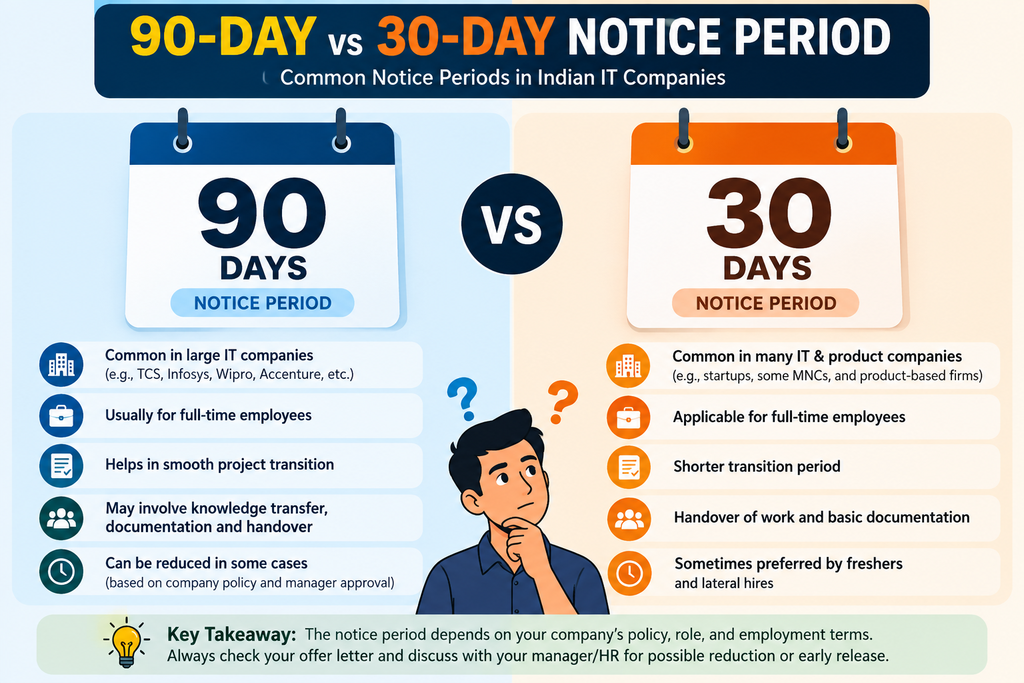
The business logic, stated from the hiring side,Immediate Joiner Notice Period India is straightforward even if it doesn’t resolve the hypocrisy: companies want new hires to move fast and contribute quickly once they join, particularly for roles tied to specific project timelines or funding cycles that can genuinely close before a 90-day notice period even runs out. From the hiring manager’s perspective, a candidate who can start in two weeks solves an urgent staffing gap in a way a candidate who can only start in three months doesn’t, regardless of how strong that second candidate’s qualifications are. The problem is that this same logic, applied symmetrically, would mean these companies should also offer short notice periods to their own outgoing staff — and the large majority of traditional Indian IT services firms simply don’t, creating exactly the bind described above: held back as an employee, screened out as a candidate, for the same underlying reason in both directions.
The “WITCH” Companies, and Why This Term Exists
It’s worth knowing a specific piece of industry shorthand if you haven’t encountered it: WITCH is a commonly used acronym across Indian tech circles referring to Wipro, Infosys, TCS, Cognizant, and HCL — the major, traditional IT services firms most associated with standardized 90-day notice periods. This term exists specifically because these five companies’ notice period policies are consistent and pervasive enough across the industry to have earned their own shared label, and it’s worth recognizing when you see it used in forums, discussions, or advice specifically about navigating Indian tech hiring, since it’s shorthand for exactly the kind of long-notice-period employer this guide addresses.
The Genuine, Well-Documented Cost of a Long Notice Period
Beyond the frustration of the contradiction itself, a long notice period carries real, measurable costs during a job search. Candidates serving a 30-day notice are consistently reported to be preferred over equally qualified candidates serving 90 days, even when the underlying skills and experience are comparable. This shows up concretely when weighing two competing offers: a candidate holding two offers with different notice terms often ends up losing the objectively better one, simply because that employer isn’t able or willing to wait three months for the position to open up, while a competing, less appealing offer from a company with more flexibility gets accepted instead purely due to timing rather than genuine preference.
The Risky Workaround Worth Understanding Clearly
A pattern documented across professional discussion forums describes employees resigning from their current role specifically to present themselves as an “immediate joiner” during a new job search, on the theory that removing the notice-period barrier improves their odds of being considered. This carries a genuine, serious risk worth naming directly: if the anticipated new offer doesn’t actually materialize after resignation, the employee is left needing to formally withdraw their resignation — which isn’t guaranteed to be accepted, since employers aren’t obligated to reverse an already-submitted and processed resignation. Resigning speculatively, before a new offer is genuinely secured and confirmed in writing, is a materially risky strategy that trades a real, existing job for an uncertain, unconfirmed one, and it’s worth treating this specific approach with real caution rather than as a routine, low-risk job-search tactic.
The Portal-Listing Adjustment Some Candidates Make
A separate, less drastic tactic reported in professional discussions involves adjusting your stated notice period on job portal profiles (like Naukri) after formally resigning, specifically to surface in searches and filters that screen for shorter notice periods. This is a genuinely different situation from the speculative pre-emptive resignation described above, since it happens only after a resignation has already been formally submitted and accepted — at that point, your notice period figure is a factual, current status, not a fabrication, and updating your portal profile to reflect your actual, current situation accurately is reasonable rather than deceptive. The distinction that matters: updating your listed notice period to reflect a genuine, already-submitted resignation is honest; falsely claiming immediate-joiner status while still fully employed with no resignation submitted is a different, considerably riskier claim to make.
What This Means If You’re Currently Serving a Long Notice Period
Given the genuine competitive disadvantage a long notice period creates, a few honest, lower-risk strategies are worth prioritizing over the speculative-resignation approach:
- Be transparent about your actual notice period early in the interview process, rather than letting a mismatch surface only once an offer is being finalized. Recruiters and hiring managers generally respond better to early clarity than to a late-stage surprise that derails an otherwise advanced process.
- Proactively raise the possibility of a notice period buyout during salary and offer negotiations, rather than waiting for the new employer to ask. As covered in more detail in this site’s dedicated guide to notice period buyouts, employers cannot arbitrarily refuse a reasonable buyout request without genuine operational justification — raising this early gives both sides more room to work out a mutually workable timeline.
- Target companies and sectors with more flexible notice period norms specifically, if your own notice period is genuinely long and difficult to shorten. Product companies, startups, and Global Capability Centres often carry shorter standard notice periods (30 days is common) compared to traditional IT services firms, making them structurally better matches for candidates trying to move quickly.
- Confirm any new offer in writing before submitting your resignation, rather than resigning on the strength of a verbal indication or an informal assurance. A confirmed, signed offer letter is meaningfully different from “they seemed very interested” — treat the distinction as genuinely consequential given the risks described above.
How to Actually Have the Transparency Conversation
Since being upfront about your notice period is the lowest-risk path through this dynamic, it’s worth having a genuinely workable script rather than just knowing you “should” disclose it. A workable approach: raise it proactively rather than waiting to be asked, frame it as a solvable logistics question rather than an apology, and pair it immediately with a concrete alternative. Something close to: “My current notice period is 90 days per my contract, though I’m open to discussing a buyout to reduce that timeline if joining sooner is important for this role — happy to explore what would work on both sides.” This does three things at once: it’s honest about the constraint, it signals you’re aware of and willing to work through the buyout mechanism rather than treating your notice period as fixed and non-negotiable, and it invites the hiring manager into a problem-solving conversation rather than presenting your notice period as a take-it-or-leave-it obstacle.
Why Recruiters Themselves Are Often Caught in the Middle
It’s worth understanding that individual recruiters frequently aren’t the ones setting the “immediate joiners only” filter — they’re often executing a hiring manager’s or client’s specific requirement, sometimes one driven by a staffing agency’s own placement incentives that reward faster fills. This matters practically because a recruiter telling you a role requires an immediate joiner isn’t necessarily reflecting rigid company policy that can’t flex at all — it may reflect what’s been communicated to them as the current priority, which can sometimes shift if a sufficiently strong candidate with a slightly longer timeline is presented directly to the actual hiring manager rather than filtered out at the recruiter screening stage. This is worth knowing specifically because it means a well-reasoned, direct case for your candidacy — made confidently rather than apologetically about your notice period — occasionally does succeed in getting a hiring manager to reconsider a filter that a recruiter initially treated as a hard requirement.
What This Means If You’re Currently Hiring, or Thinking Like a Hiring Manager
It’s worth understanding the other side of this dynamic too, since it clarifies why the contradiction persists rather than resolving on its own. Hiring managers screening for immediate joiners are typically responding to genuine, immediate staffing pressure — a project deadline, an unexpected departure, a client commitment already made — rather than an arbitrary preference. This doesn’t excuse the structural hypocrisy of imposing long notice periods while refusing to accept them from candidates, but it does explain why individual recruiters and hiring managers, working within pressures they don’t personally control, often can’t simply waive this requirement even when a specific candidate is otherwise clearly the strongest option available.
How the New Labour Codes Intersect With This Dynamic
If you’ve been following the broader labour code changes covered elsewhere on this site, it’s worth knowing that notice period regulation itself remains governed primarily by your individual employment contract and your state’s specific Shops and Establishments Act, rather than being uniformly set by a single central rule — a detail that matters specifically for remote workers, since the governing state law typically follows wherever your employing establishment is registered, not simply wherever you happen to be physically located. This means a distributed team can genuinely be spread across several different state-level notice period regimes simultaneously, each with its own specific quirks, and the rules operationalizing the broader labour code consolidation are still being notified across different states through 2026 — meaning day-to-day notice period practice may continue shifting even as the underlying employer-versus-candidate contradiction described throughout this guide remains structurally unchanged.
A Reasonable Way to Think About the Public Debate Around This
There’s a genuine, ongoing public conversation about whether India’s traditional 90-day IT notice period should be reduced — a Change.org petition specifically calling for a reduction to 30 days reflects broader industry sentiment that this duration increasingly mismatches how fast the technology sector actually moves. Whether or not this reform happens at an industry-wide level, it’s realistic to expect the underlying tension described in this guide to persist for the foreseeable future, since it stems from a genuine, structural mismatch between what companies want as employers (long notice periods protecting their own operational continuity) and what they want as hirers (fast access to new talent) — a mismatch that isn’t likely to resolve cleanly until one side of that equation shifts industry-wide, rather than through any single company’s individual policy change.
What Genuinely Might Shift This Over Time
It’s worth considering what could realistically move this dynamic, even gradually. Competitive pressure from product companies and global capability centres, which typically maintain shorter, more market-aligned notice periods, creates an ongoing incentive for traditional IT services firms to reconsider their own standard terms if they find themselves consistently losing strong candidates to more flexible competitors during the hiring process itself. Separately, as remote and distributed work arrangements become more common — and as the state-specific labour law complexity described above becomes more visible to both employers and employees navigating it — some pressure toward standardizing shorter, less operationally disruptive notice periods may build simply as a practical matter of reducing administrative complexity, independent of any explicit policy debate about fairness. Neither of these forces guarantees a near-term resolution, but they represent more realistic pathways to gradual change than expecting a single, industry-wide reform to resolve the contradiction all at once.
The Probation Period Exception Worth Knowing
One genuinely useful detail worth factoring into your own planning: if you’re still within your probation period at your current employer, your notice period obligation is typically considerably shorter than the standard post-confirmation figure — commonly just 7 to 15 days, sometimes even less, depending on your specific appointment letter’s terms. This means candidates early in a role, still within probation, are structurally much better positioned to meet an “immediate joiner” or short-notice requirement than colleagues who’ve been confirmed in their role for a longer period and are bound by the full standard notice term. If you’re weighing whether to make a move, checking your own current probation status specifically — rather than assuming the standard 90-day figure automatically applies to you — is worth doing before assuming you’re at a structural disadvantage in a fast-moving hiring process.
A Final Word on Managing the Emotional Side of This
Beyond the practical strategies covered throughout this guide, it’s worth acknowledging directly that navigating this contradiction can genuinely feel demoralizing — being held to a standard your own prospective employer doesn’t apply to itself is a legitimate source of frustration, not an overreaction. That said, it’s worth channeling this frustration into the specific, actionable steps covered above (early transparency, proactive buyout negotiation, targeting more flexible employers) rather than letting it drive an impulsive decision like the speculative pre-emptive resignation described earlier, which converts a frustrating but stable situation into a genuinely precarious one. The structural mismatch described in this guide is real and worth naming clearly, but the most effective individual response to a structural problem is still a deliberate, low-risk strategy rather than a reactive one driven primarily by frustration with an admittedly unfair dynamic.
Quick Answers
Why do companies enforce long notice periods but refuse candidates serving one?
Companies want operational continuity when their own staff leave (favoring a long notice period as the departing employer) but want fast access to new talent when hiring (favoring short notice periods as the recruiting employer) — the same underlying business logic applied asymmetrically depending on which side of the transaction the company is on.
What are “WITCH” companies?
A commonly used industry shorthand for Wipro, Infosys, TCS, Cognizant, and HCL — the major traditional Indian IT services firms most associated with standardized 90-day notice periods.
Is it safe to resign before I have a confirmed offer, just to appear as an immediate joiner?
No, this carries genuine risk — if the anticipated offer doesn’t materialize, your resignation may not be reversible, since employers aren’t obligated to accept a withdrawal request.
Is it dishonest to update my notice period on job portals after I’ve already resigned?
No, this reflects your genuine, current status once a resignation has actually been formally submitted — the risk lies specifically in falsely claiming immediate-joiner status while still fully employed with no resignation submitted at all.
Can I negotiate a shorter notice period or a buyout with my current employer?
Yes, and proactively raising this early in your job search process, rather than waiting until an offer is being finalized, generally produces a better outcome than a late-stage scramble.
Are all Indian companies equally strict about long notice periods?
No, product companies, startups, and Global Capability Centres often carry shorter standard notice periods (commonly 30 days) compared to traditional IT services firms, making them structurally more flexible for candidates needing to move quickly.
Does my notice period depend on a single national rule, or does it vary?
It varies — your specific contract and your state’s Shops and Establishments Act govern your notice period, and for remote workers specifically, the applicable state law generally follows where your employing establishment is registered, not simply where you’re physically based.
If you’re currently navigating a job switch and weighing a buyout against serving out your notice, our guide on Notice Period Buyout 2026 covers the legal mechanics and the actual formula employers use, and our piece on Salary Negotiation in India 2026 is worth reading alongside this one, since notice period timeline and compensation negotiation frequently happen in the same conversation with a prospective employer — approaching both together, rather than treating notice period as a separate, secondary detail to raise only after salary is settled, generally leads to a more coherent, confident negotiation overall.
Suggested Internal Links
- Career Resources Category
- Notice Period Buyout 2026: Can Employers Refuse It?
- Salary Negotiation India 2026: Why CTC Changes Everything
- Background Verification India 2026: What Actually Gets Checked
Suggested External References
- Ministry of Labour and Employment, Government of India: https://labour.gov.in
- Industrial Relations Code, 2020 (Official Text): https://labour.gov.in
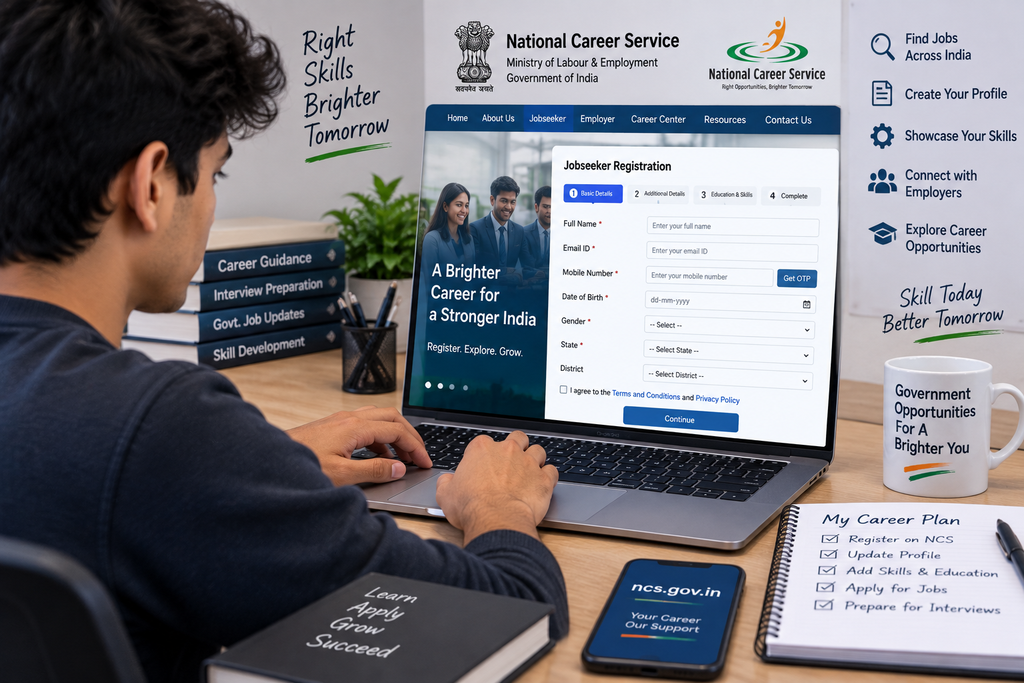
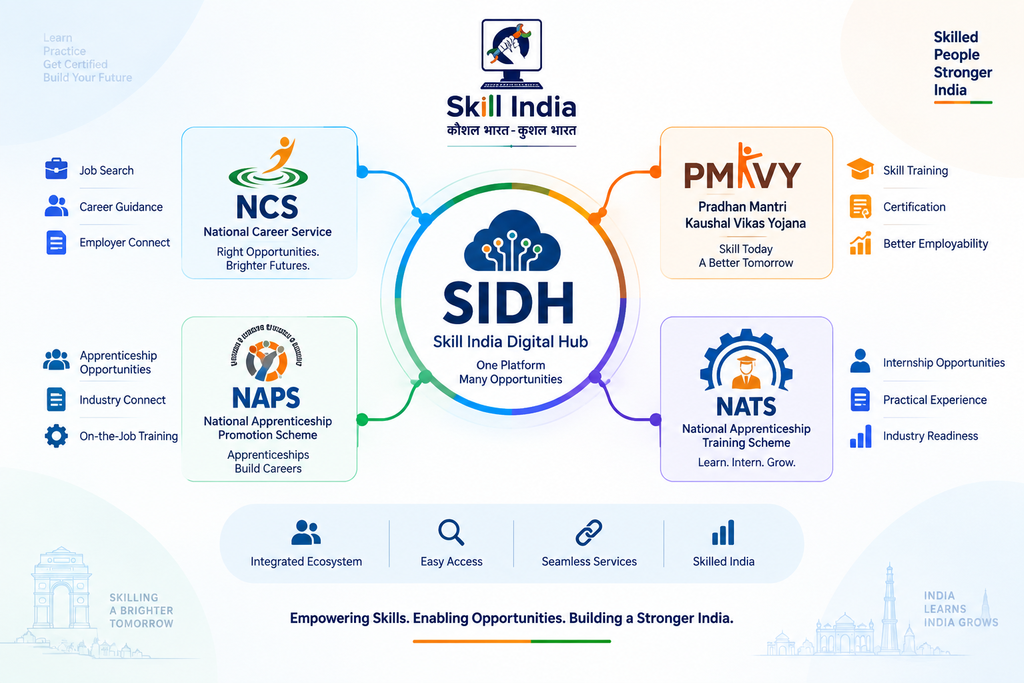
- National Career Service Portal (India): https://www.ncs.gov.in