Search “Microsoft Internship 2027” and most results talk about it as a single, unified thing you either qualify for or don’t. In reality, Microsoft runs at least five genuinely distinct internship tracks simultaneously — Explore Microsoft, the Discovery Program, standard Software Engineering Intern roles, the Microsoft Research India Fellow Program, and separate PhD/MBA/JD-specific tracks — each with different eligibility windows, different durations, and different applicant pools. A first-year engineering student and someone who just completed their B.Tech are not competing for the same opportunity, even though both might describe what they’re applying for as “a Microsoft internship.”
There’s a second thing worth knowing before you go further: as of the most recent detailed check on this topic, no official Microsoft source has published a universal 2027 opening date or deadline for these programs, even though old timelines from previous cycles continue circulating online as if they were current. If you’ve seen a specific date confidently quoted somewhere, treat that with real skepticism unless it traces directly back to Microsoft’s own careers site. This guide breaks down which program actually matches your academic stage, what’s genuinely confirmed about timing versus what’s speculation, and a repeat-eligibility rule that surprises a lot of applicants who assume doing well once guarantees a second placement.
Table of Contents
The Five Tracks, and Who Each One Is Actually For
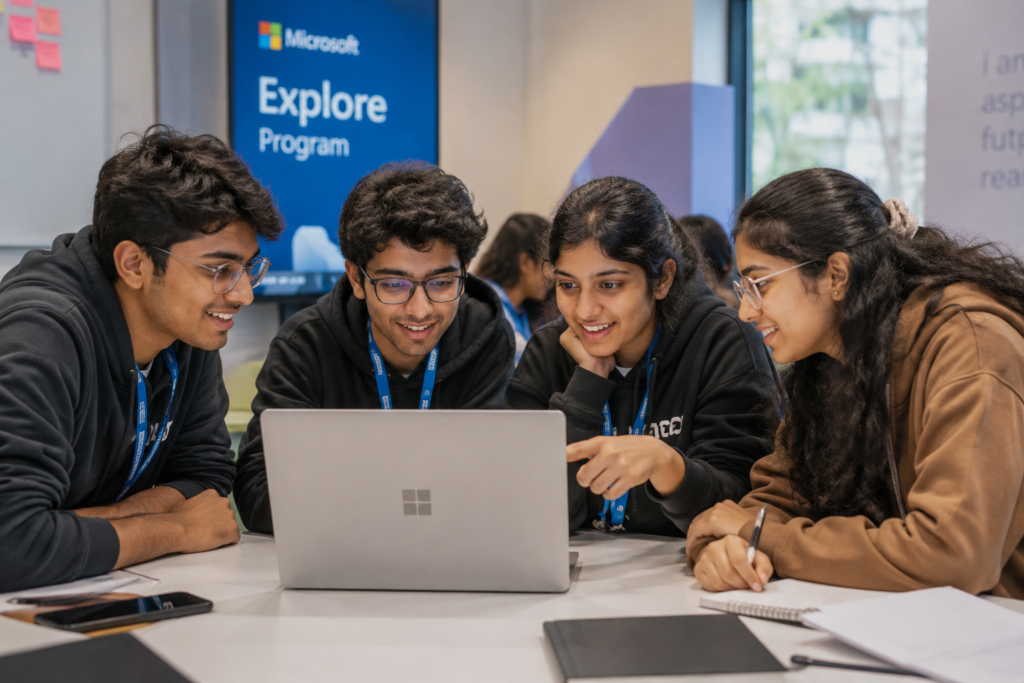
Explore Microsoft is specifically built for first- and second-year college students — an 8-week program in India (12 weeks in the US),Microsoft Internship 2027 focused on early exposure to the product development lifecycle rather than deep technical specialization. Interns work in small teams called “pods,” moving through Design, Build, and Quality phases together. No prior internship experience is required, and no referral is needed to apply — a detail worth knowing since some applicants assume, incorrectly, that a referral is a prerequisite.
The Discovery Program sits alongside Explore as another early-year-focused track, though with a somewhat different structure and focus depending on the specific cycle’s offerings — both exist specifically to give students without prior industry experience a genuine, guided entry point rather than expecting them to compete directly against more experienced candidates.
Standard Software Engineering Intern roles are aimed at pre-final-year students — meaning, in practice, students who still have at least one full academic semester remaining after the internship concludes. These are direct, project-based technical roles, based on-site in cities like Bangalore, Hyderabad, and Mumbai for India-based positions, and they represent Microsoft’s largest-volume internship category globally, with the company hiring roughly 1,700 to 2,000 SWE interns and around 300 Explore interns in the US alone each summer, plus thousands more across other disciplines worldwide.
The Microsoft Research India (MSRI) Research Fellow Program is a fundamentally different kind of opportunity — not a summer internship in the traditional sense, but a longer-term, research-focused placement based in Bengaluru for candidates who have completed or are about to complete a BTech/BE or MTech/ME in Computer Science or a closely related field. Research Fellows work directly with senior Microsoft researchers across the full research lifecycle, from initial ideation through implementation and evaluation to eventual deployment — a genuinely different experience from a standard product-team internship, oriented toward candidates with research ambitions rather than purely product-engineering interests.
PhD, MBA, and JD-specific tracks exist separately again, tailored to the specific academic and career stage of doctoral, business, and law students respectively, reflecting the reality that Microsoft’s internship needs span far beyond undergraduate software engineering alone, spanning research, business strategy, and legal functions across the company’s global operations.
Why “No Confirmed Date Yet” Doesn’t Mean “Nothing Is Happening”
This distinction matters, since it’s easy to misread “no universal date confirmed” as “the program isn’t active.” In practice, Microsoft’s hiring for the cycle covering summer 2027 placements is already genuinely underway on a rolling basis. US intern requisitions have been posting continuously on Microsoft’s careers site since 10 August 2026, and specific university-student Software Engineer intern postings that appeared in early September were already gone from the board within nine days of going live. Rolling, continuous posting with individual listings disappearing quickly is a fundamentally different pattern from a single fixed application window most casual advice implies — which means “waiting for the official 2027 deadline to be announced” is itself a mistake if requisitions matching your eligibility are already live and closing quickly.
The Repeat Rule Most Applicants Don’t Know About
Here’s a specific, easy-to-miss detail worth knowing if you’re considering Microsoft’s programs as a multi-year strategy: you cannot complete two back-to-back Microsoft internships. A gap semester or year is required between consecutive placements. This means if you did an Explore internship last year, you generally cannot immediately follow it with a standard SWE internship the very next cycle — Microsoft’s structure specifically requires a break between placements, rather than allowing a continuous, uninterrupted internship pipeline with the same company year after year. If your longer-term plan involves multiple Microsoft internships across your academic career, factor this gap requirement into your planning rather than assuming back-to-back placement is possible.
Eligibility, Stated Precisely
Based on Microsoft’s own published internship eligibility guidance:
- Enrollment: Full-time in a Bachelor’s, Master’s, MBA, or PhD program, with at least one academic semester remaining after the internship concludes
- Explore specifically: First- or second-year students, full-time in a Bachelor’s program during the internship period
- Standard SWE Intern roles: Generally pre-final-year students, in practice meaning candidates with sufficient time remaining before graduation
- MSRI Research Fellow: Completed or completing a BTech/BE or MTech/ME in Computer Science or a related field
- Work authorization: Candidates must hold legal rights to work in their specific application country
- Repeat placements: Not permitted back-to-back; a gap semester or year is required between consecutive Microsoft internships
What Compensation Actually Looks Like
Microsoft confirms its internships are paid, but exact stipend figures for India and other markets outside North America are not published publicly — they’re localized to reflect regional standards and shared directly with selected candidates in their specific offer letters. Microsoft’s own guidance explicitly advises applicants to rely on official communication rather than online estimates or third-party salary claims, which is worth taking seriously given how much speculative “Microsoft internship stipend in India” content circulates without verified sourcing. If you’re selected, your actual offer letter is the only reliable source for your specific compensation figure.
How to Actually Apply
- Visit Microsoft’s official careers site directly and navigate to the internship-specific section, rather than relying solely on third-party job platforms, though verified aggregators like Unstop do carry legitimate, direct listings for programs like Explore.
- Identify which of the five tracks above actually matches your current academic stage — don’t apply broadly to programs you’re not genuinely eligible for, since eligibility mismatches waste both your time and the reviewer’s.
- Complete your candidate profile with accurate academic, personal, and technical details.
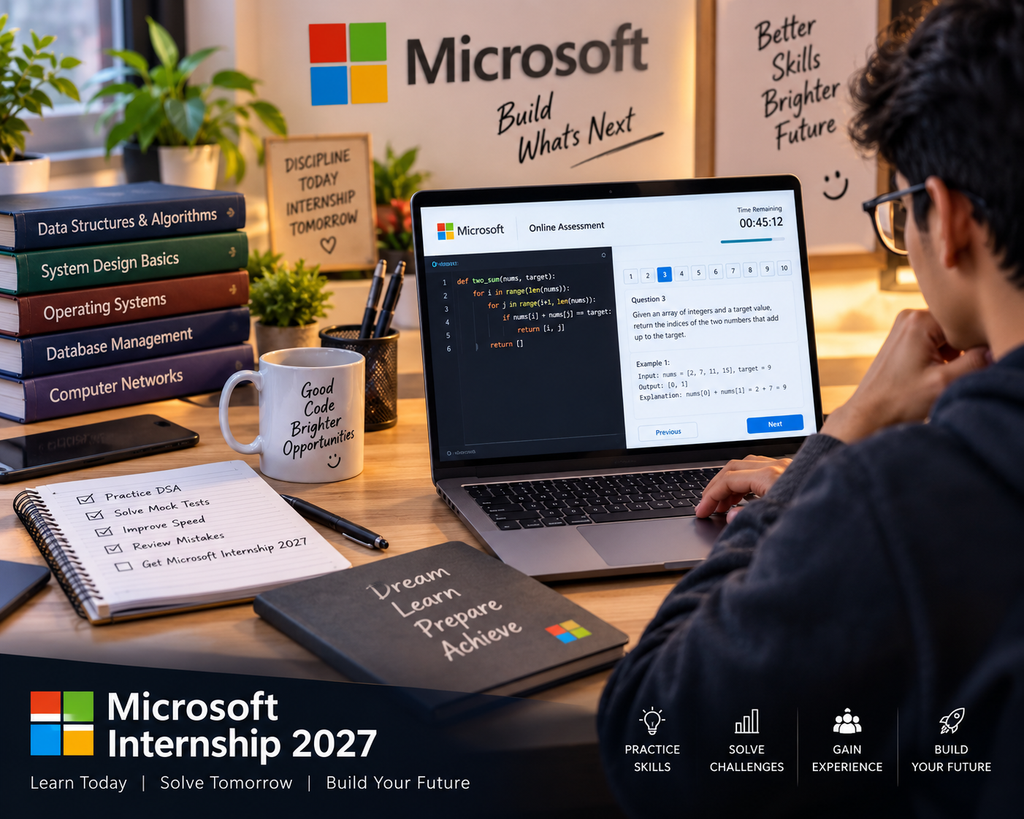
- For technical tracks (Explore, SWE Intern), prepare for an Online Assessment (OA) as an early screening stage, followed by technical and behavioral interview rounds.
- Submit your application promptly once you identify a matching, currently open requisition — given how quickly individual postings have been observed disappearing (within roughly nine days in recent cycles), treat “I’ll apply next week” as a genuine risk of missing the window entirely.
- No referral is required for Explore specifically, though a genuine, relevant referral can still meaningfully strengthen an application for any Microsoft track if you have access to one through your network.
Preparing for the Online Assessment and Interview Stages
Since technical tracks specifically involve an Online Assessment as an early filter, focused preparation on core data structures, algorithms, and problem-solving under time pressure remains the most direct way to prepare, regardless of which specific Microsoft program you’re targeting. Beyond the technical assessment, interview rounds typically probe both technical depth and behavioral fit — genuine examples of past projects, problem-solving approaches, and collaborative work matter alongside raw coding ability, particularly for Explore and Discovery applicants where Microsoft explicitly frames the program as learning-focused rather than purely a technical filter.
Why Picking the Right Track Matters More Than Just Applying Broadly
Given how differently these five programs are structured, applying to the wrong track for your academic stage isn’t a neutral, low-cost mistake — it’s a genuine waste of a limited, competitive opportunity. A first-year student applying to a standard SWE Intern role clearly built for pre-final-year candidates is unlikely to be seriously considered regardless of technical ability, simply because the eligibility structure doesn’t match. Conversely, a graduating BTech student with genuine research interest who defaults to a standard product-team SWE internship, without knowing the MSRI Research Fellow Program exists as a distinct, better-fitting alternative, may be missing the track actually built for their specific profile and interests. Taking the time to correctly map yourself onto one of these five tracks before applying is a genuinely higher-leverage use of your preparation time than broadly applying to whatever Microsoft listing appears first in a search.
Common Eligibility Mismatches Worth Double-Checking
Since the five tracks have overlapping but distinct eligibility windows, a few specific mismatches are worth checking carefully before you invest time in an application. A second-year student who has already completed one Explore internship the previous summer needs to account for the mandatory gap rule before assuming immediate eligibility for a second Explore cycle. A final-year student graduating within the same academic year as the internship period may fall outside the “at least one semester remaining” requirement for standard SWE Intern roles, even though they might still be eligible for Explore-adjacent programs if their academic timeline technically qualifies them as still early-stage in a specific reading of the eligibility criteria. International students specifically need to confirm their own work authorization status in whichever country they’re applying to work in, since this requirement is explicitly non-negotiable regardless of academic qualification. When in doubt about your specific eligibility for a specific track, Microsoft’s own careers site eligibility page is the authoritative source to check directly, rather than relying on a general eligibility summary, including this one, which necessarily simplifies details that can vary by specific role and cycle.
What Happens Once You’re Selected
If you clear the assessment and interview stages successfully, the next steps typically involve a formal offer communicated directly through Microsoft’s recruiting team, including your specific compensation details, start date, and location assignment. For India-based roles specifically, this is also when logistics like accommodation arrangements (if provided or facilitated) and any pre-onboarding requirements get communicated. Given how much unofficial “what happens after you get a Microsoft offer” content circulates with unverified specifics, treat your own actual offer communication as the definitive source for anything specific to your placement, rather than assuming a previous year’s reported experience applies identically to your own cycle.
Standing Out When Hundreds of Applications Land the Same Day
Given the rolling posting pattern and how quickly individual listings close, it’s worth understanding what actually differentiates an application in this environment beyond simply submitting quickly. Since a popular requisition can draw a large volume of applications within its first few days alone, speed matters, but a generic, unfocused profile submitted quickly is still weaker than a well-tailored one submitted a day or two later, provided you’re still within the window. The practical balance: have your core materials — resume, project descriptions, coding practice — genuinely ready in advance, so that when a matching listing appears, your actual submission takes minutes rather than days, and the speed advantage comes from preparation rather than from rushing a hastily assembled application together after the fact.
Why the MSRI Track Deserves More Attention Than It Gets
Among the five tracks covered here, the Microsoft Research India Fellow Program is arguably the most under-discussed relative to its actual value, since most casual coverage of “Microsoft internships” focuses almost entirely on the more visible, higher-volume Explore and SWE Intern tracks. For a graduating BTech or MTech student with genuine interest in research — rather than purely product engineering — this track offers something the higher-volume tracks generally don’t: sustained, close collaboration with senior researchers across a complete research lifecycle, from initial ideation through to actual deployment. This kind of experience carries particular weight if you’re considering graduate study or a research-oriented career path afterward, since it demonstrates genuine research methodology exposure in a way a single summer product internship typically doesn’t. If your academic background and interests lean this direction, actively seeking out this specific program rather than defaulting to the more commonly discussed SWE Intern track is worth the extra research into its specific application process.
What a Realistic Preparation Timeline Looks Like
Given the rolling, fast-closing nature of these postings, treating preparation as a months-long process rather than something to start once a listing appears meaningfully improves your odds. If you’re targeting a technical track specifically, building consistent practice with core data structures and algorithmic problem-solving well before you expect a relevant requisition to open means you’re ready to submit a strong application within days of a listing going live, rather than needing weeks of catch-up preparation while the window is actively closing. For Explore and Discovery applicants specifically, since these programs emphasize learning readiness and collaborative potential over deep technical polish, spending preparation time on articulating genuine project experiences and demonstrating curiosity about the product development process can matter as much as coding practice alone.
How This Fits Into a Broader Internship Strategy
If you’re weighing Microsoft’s programs against other opportunities covered on this site — Google Summer of Code’s open-source contribution model, or India’s various government-backed skilling and internship initiatives — it’s worth recognizing that these serve genuinely different purposes rather than competing directly for the same slot in your resume. A Microsoft Explore internship demonstrates early, guided exposure to a major tech company’s actual working environment. GSoC demonstrates independent, self-directed technical contribution to public, verifiable open-source work. A government-backed skilling program like TASK Telangana or APSSDC demonstrates structured technical training tied to your specific academic institution. None of these substitute for each other, and pursuing more than one across your academic career — provided the timing doesn’t conflict — builds a genuinely more well-rounded profile than concentrating exclusively on chasing a single most-recognizable company name, since a resume showing guided industry exposure, independent technical initiative, and structured formal training together tells a considerably more complete story than any single credential in isolation.
Quick Answers
Is “Microsoft Internship” one single program?
No, it spans at least five distinct tracks — Explore Microsoft, the Discovery Program, standard Software Engineering Intern roles, the MSRI Research Fellow Program, and separate PhD/MBA/JD tracks — each with different eligibility and structure.
When does Microsoft Explore 2027 open?
As of the most recent detailed check, no official universal opening date has been published; hiring is proceeding on a rolling basis, with some cycles’ postings appearing and closing within days.
Do I need a referral to apply for Explore Microsoft?
No, a referral is not mandatory — students can apply directly through Microsoft’s official careers portal.
Can I do two Microsoft internships back-to-back?
No, Microsoft requires a gap semester or year between consecutive internship placements.
What is the Microsoft Research India Fellow Program?
A longer-term, research-focused placement in Bengaluru for candidates who’ve completed or are completing a BTech/BE or MTech/ME in Computer Science or a related field, distinct from Microsoft’s standard summer internship tracks.
How much does a Microsoft internship pay in India?
Exact stipend figures aren’t published publicly for India specifically; compensation is localized and confirmed directly in your individual offer letter if selected.
How long does the Explore internship run in India versus the US?
8 weeks in India, compared to 12 weeks in the United States, adjusted to align with each region’s academic calendar.
Is prior internship experience required for Explore or Discovery?
No, both programs are explicitly designed as learning-focused entry points specifically for students without prior industry internship experience, making them genuinely accessible starting points rather than requiring an existing track record.
If you’re preparing for the technical assessment stage of any of these Microsoft tracks, our guide on AI Powered Software Engineer Preparation covers the core data structures and problem-solving fundamentals that matter across virtually every major tech company’s internship screening process, not just Microsoft’s specifically — and given how competitive even the entry-level Explore track has become, treating that preparation as seriously as you would for a standard SWE Intern application is a reasonable, worthwhile investment of your time.
Suggested Internal Links
- Internships Category
- AI Powered Software Engineer Preparation: Best 2026 Guide
- GSoC 2027: Why September Is the Right Time to Start
- Free ATS Resume Builder Tools 2026: 7 Tested
Suggested External References
- Microsoft Careers Internship Eligibility Page: https://careers.microsoft.com/v2/global/en/internship_eligibility
- Explore Microsoft Program Official Page: https://careers.microsoft.com/v2/global/en/exploremicrosoft
- Microsoft Research India: https://www.microsoft.com/en-us/research/lab/microsoft-research-india