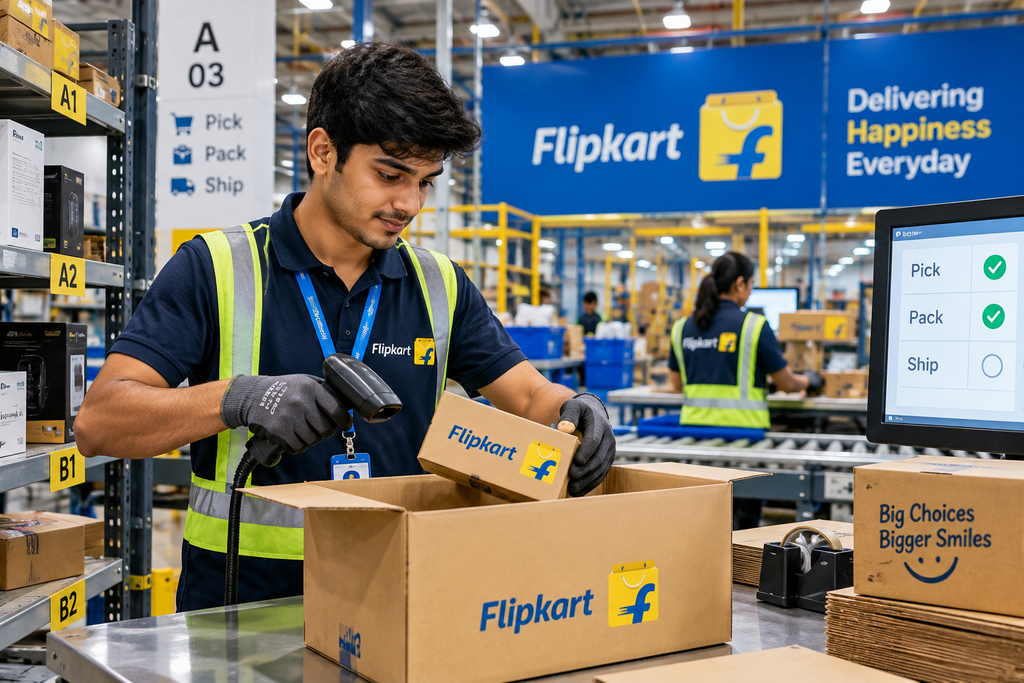
Flipkart Warehouse Jobs 2026 has launched 11 new fulfilment centres across nine cities, bringing its total network to 83 facilities nationwide, and the company says this expansion alone will create more than 100,000 job opportunities across India. The timing isn’t random — it’s deliberately positioned just ahead of Flipkart’s flagship Big Billion Days sale, the festival-season shopping event that drives a massive, predictable spike in order volume every year.
If this is the first time you’re hearing about a hiring wave like this, it’s worth understanding two things clearly: what these jobs actually involve, since “warehouse jobs” covers several genuinely different roles, and why this specific kind of large-scale hiring surge happens on a recurring, roughly annual cycle tied to India’s festival shopping season — meaning if you’re reading this too late for this particular wave, a similar one is coming again next year, and understanding the pattern now means you won’t be caught off guard next time.
Table of Contents
What Flipkart Actually Announced
The expansion covers 11 new fulfilment centres spread across nine cities, part of a broader supply chain buildout ahead of the festival season. Flipkart Warehouse Jobs 2026specifically named the roles this hiring wave spans: inventory managers, warehouse associates, logistics coordinators, kirana partners, and delivery drivers. This breadth is worth noting — it’s not just one type of warehouse floor job, but a genuinely diverse set of positions across the supply chain, from physical picking and packing work through to coordination and driving roles.
Why This Happens Every Year, Not Just This Year
This is the part most casual coverage skips, and it’s genuinely useful to understand as a pattern rather than a one-time event. India’s major e-commerce platforms — Flipkart and Amazon India both — run flagship festival sale events each year, timed around the Diwali shopping season, when order volumes spike dramatically compared to the rest of the year. To handle that surge without service breakdowns, both companies ramp up warehouse and logistics staffing substantially in the weeks and months leading up to these events, then typically scale back somewhat once the peak season passes. Amazon runs a comparable pattern globally and in India, with its own large-scale seasonal fulfilment center hiring tied to major shopping events. If you’re specifically interested in this category of work, treating it as a genuinely recurring annual opportunity — worth watching for every year around the same August-to-October window — is a more useful mental model than treating any single year’s announcement as a unique, one-off event.
The Different Roles, Disambiguated
Since “warehouse jobs” understates how varied these positions actually are, it’s worth breaking down what each one typically involves:
Warehouse Associates (Pickers/Packers) handle the physical, floor-level work — retrieving customer orders from shelves, verifying item quantity and quality, and packing products securely for shipment. This is the highest-volume role category in any fulfilment center hiring wave, and typically the most accessible entry point in terms of qualification requirements.
Inventory Managers oversee stock levels, accuracy, and warehouse organization at a more supervisory level, typically requiring some prior experience or a demonstrated aptitude for organizational and basic analytical work rather than being a pure entry-level floor position.
Logistics Coordinators manage the movement of goods between facilities and to delivery networks, involving more planning and coordination responsibility than a warehouse-floor role.
Kirana Partners reflects Flipkart’s specific hybrid model integrating local kirana (neighborhood) stores into its delivery and fulfilment network — a role structure fairly unique to the Indian e-commerce logistics model rather than a standard, universal warehouse job category.
Delivery Drivers handle the final-mile delivery of packages to customers, a role with its own separate vehicle and licensing requirements distinct from warehouse-floor positions.
What These Roles Actually Pay
Based on current listings, a Picker/Packer role at one Flipkart-linked fulfilment operation (through Instakart Services, Flipkart’s logistics arm) shows a salary range of approximately ₹11,000 to ₹20,000 per month, explicitly described as based on performance, attendance, and shift allocation — meaning the actual figure you’d earn depends meaningfully on your specific shift pattern and consistency, not a single flat rate. Given that pay structures vary by specific facility, city, and role, treat any single figure as a general reference point rather than a guaranteed number for every listing under this broader hiring wave, and confirm the specific compensation structure directly during your application or interview process.
Why the Pay Structure Rewards Consistency Specifically
It’s worth understanding the “based on performance, attendance, and shift allocation” framing a little more concretely, since it directly affects how much you’d actually take home. Warehouse and fulfilment roles in this sector commonly structure pay with a base component plus additional incentives tied to meeting productivity targets, maintaining strong attendance, and being willing to work less popular shifts (particularly night shifts, which frequently carry a pay premium given lower voluntary uptake). This means two people doing the same nominal job title can end up with meaningfully different monthly earnings based on how consistently they show up and which shifts they’re willing to take — worth factoring into your own decision if you’re weighing this kind of role against a fixed-salary alternative.
Eligibility: Generally Accessible, With Some Role-Specific Requirements
Warehouse Associate and similar floor-level roles in this sector typically carry a low formal qualification bar — often requiring only basic literacy and physical fitness for the work involved, without a specific degree requirement. Delivery Driver roles specifically require a valid driving license matching the vehicle category involved. More supervisory roles like Inventory Manager or Logistics Coordinator generally expect some prior relevant experience or a demonstrated organizational skill set, even if a formal degree isn’t strictly mandatory. Given this range, this hiring wave is genuinely accessible to a broad spectrum of job seekers — from someone with just a basic education looking for their first formal job, to someone with prior logistics or supervisory experience looking for a more senior entry point.
How This Compares to Amazon’s Parallel Hiring Effort
Since Flipkart isn’t the only major player running this kind of seasonal surge, it’s worth briefly comparing the two largest e-commerce employers in this space. Amazon operates its own large-scale fulfilment center hiring globally, including in India, tied to its own major shopping events, with a broadly similar role structure — pickers, packers, stowers, and sorters handling the physical warehouse-floor work, alongside delivery and logistics coordination roles. Amazon’s own messaging around this category of hiring emphasizes a quick, accessible application process explicitly requiring no resume for many entry-level warehouse positions, along with benefits available from the first day of employment in many of its markets. If you’re specifically comparing opportunities between the two companies rather than committing to whichever announcement you happen to see first, checking both companies’ current openings in your specific city, rather than assuming one is uniformly better than the other, is the more reliable way to find the best specific match for your situation, since actual role availability, pay, and facility conditions vary considerably by location for both employers.
Understanding the Kirana Partner Model Specifically
Since this role type is somewhat unique to how Indian e-commerce logistics has evolved, it’s worth a slightly deeper explanation. Rather than relying purely on large, centralized warehouses, companies like Flipkart have built hybrid models that integrate small, local neighborhood kirana stores into their delivery and fulfilment network — using these existing local businesses as smaller fulfilment or last-mile delivery points within their broader logistics chain. A “kirana partner” role in this context typically means an existing shop owner or operator entering into a formal partnership arrangement with the e-commerce company, rather than a traditional employee applying for a job in the conventional sense. If you or your family already run a small local shop, this specific opportunity is worth investigating separately from the standard employee application process, since the structure, compensation model, and application route differ meaningfully from applying for a Warehouse Associate or Delivery Driver position as an individual job seeker.
Documents Worth Preparing Before You Apply
For the standard employee-track roles in this hiring wave — Warehouse Associate, Inventory Manager, Logistics Coordinator — a consistent baseline of documentation is worth having ready regardless of which specific facility or city you’re applying to. This includes a valid government-issued photo ID, your educational certificates matching whatever minimum qualification the specific role requires, passport-size photographs, and for Delivery Driver roles specifically, your driving license along with any vehicle registration documents if you’re using your own vehicle for the role. Given the scale and pace of this hiring wave, having these documents ready in digital and physical form before you begin applying can meaningfully speed up your own processing time relative to candidates scrambling to gather documentation after already being shortlisted.
What the Physical Work Actually Involves
It’s worth setting realistic expectations about the physical demands of floor-level fulfilment work specifically, since this is genuinely different from an office or customer-service role covered elsewhere on this site. These roles typically involve extended periods on your feet, walking significant distances across a large warehouse floor throughout a shift, and repetitive lifting and handling of packages within safety-guided weight limits. Companies in this sector generally provide safety training and ergonomic equipment, and many facilities operate in climate-controlled conditions, but the physically active nature of the work is a genuine, defining characteristic worth going in prepared for, rather than assuming it’s comparable to a seated, desk-based entry-level role.
How to Actually Apply
- Search directly for current openings through the company’s own careers portal — Flipkart’s roles run through both its own careers site and its logistics arm, Instakart Services, depending on the specific facility and role.
- Filter by your specific city, since this hiring wave spans nine cities with facility-specific openings rather than one centralized application covering all locations.
- Confirm the specific role category (Warehouse Associate, Inventory Manager, Logistics Coordinator, Delivery Driver) matches your actual interest and qualifications before applying, given how differently these roles are structured.
- For Delivery Driver roles specifically, confirm your driving license category matches the vehicle type required before applying.
- Given the scale of this hiring wave, expect the process to move relatively quickly for floor-level roles specifically, since the company’s stated goal is filling a large volume of positions within a defined pre-festival timeline.
A Genuine Safety Note Given the Scale of This Hiring Wave
Given how large and widely publicized a 100,000-job hiring announcement is, it’s worth being specifically alert to fraudulent listings that piggyback on genuine news like this. Legitimate warehouse and logistics hiring at this scale never requires candidates to pay a registration fee, a training deposit, or any upfront payment at any stage. If you encounter a listing referencing this exact hiring wave that asks for money, or routes you through an unfamiliar third-party number rather than the company’s own official careers portal, treat it as fraudulent regardless of how convincingly it references real details from this announcement.
Why India’s E-Commerce Sector Is Investing This Heavily in Physical Infrastructure
It’s worth understanding the broader business context behind an announcement this large, since it explains why this hiring wave is genuinely substantial rather than a modest, routine staffing adjustment. India’s e-commerce sector has grown dramatically over the past several years, with online retail expanding from a relatively modest base to a market now measured in tens of billions of dollars, and continued double-digit annual growth projected across most major categories. This growth has driven a parallel, sustained expansion in warehousing and fulfilment infrastructure specifically, as companies compete on delivery speed and reliability — factors that depend directly on having sufficient physical fulfilment capacity distributed across the country, close enough to major population centers to support same-day and next-day delivery promises. Flipkart’s jump to 83 total fulfilment centres, and the scale of this specific hiring wave, reflects this sector-wide infrastructure race as much as it reflects preparation for one specific festival sale event.
What Career Progression Looks Like From an Entry-Level Warehouse Role
If you’re considering this kind of role as a genuine first step rather than a purely short-term option, it’s worth knowing where consistent performers in this sector typically progress. Strong performers in Warehouse Associate roles commonly move into Team Lead or Shift Supervisor positions within a year or two, taking on responsibility for coordinating a small team and managing shift-level productivity targets. From there, a path toward Inventory Manager or Operations Manager roles is a realistic, commonly reported trajectory for those who demonstrate strong organizational and leadership capability over time. For those specifically interested in the coordination and planning side of logistics rather than floor-level supervision, building experience across multiple functional areas within a fulfilment centre — inventory handling, shipping coordination, quality control — creates a genuinely transferable skill set relevant to broader supply chain and operations roles across the wider logistics industry, not just within the specific company where you started.
How This Fits Alongside Other Entry-Level Options on This Site
If you’re weighing this kind of warehouse and logistics work against the BPO walk-in opportunities also covered on this site, it’s worth being honest about the genuine differences rather than treating them as interchangeable entry-level options. BPO and customer experience roles are primarily seated, communication-focused work; warehouse and fulfilment roles are physically active, floor-based work with different day-to-day demands entirely. Neither is inherently better — the right choice depends on your own physical preferences, communication comfort, and which specific skill set you’re hoping to build toward a longer-term direction. Someone building toward a logistics, supply chain, or operations management career specifically benefits more from warehouse and fulfilment experience than from a customer service role, even though both might appear similarly “entry-level” on the surface.
What to Expect If You’re Hired During Peak Season Specifically
It’s worth knowing that roles filled specifically for a festival-season hiring surge sometimes carry a different employment structure than a standard, indefinite hire — some positions in this kind of surge hiring are structured as seasonal or fixed-term roles tied to the peak demand period, with potential conversion to a longer-term position based on performance and ongoing business need after the peak season passes, while others are genuinely permanent from day one. This distinction matters for your own planning, so confirm directly during the application or offer stage whether a specific role is being offered as permanent, seasonal, or seasonal-with-conversion-potential, rather than assuming based on the scale of the hiring announcement alone.
Quick Answers
How many jobs is Flipkart actually creating with this expansion?
The company states its 11 new fulfilment centres, part of a broader supply chain expansion, will create more than 100,000 job opportunities across India.
Why is this hiring wave happening right now specifically?
It’s timed ahead of Flipkart’s Big Billion Days festival sale, when order volumes spike dramatically, requiring substantially more warehouse and logistics staffing to handle the surge.
Does this kind of hiring wave happen every year?
Yes, both Flipkart and Amazon India run comparable seasonal hiring surges tied to their respective annual festival sale events, making this a recurring, roughly annual pattern rather than a one-time occurrence.
What kinds of roles are actually included in this hiring wave?
Inventory managers, warehouse associates, logistics coordinators, kirana partners, and delivery drivers — a genuinely varied set of positions across the supply chain, not just one type of floor job.
How much do warehouse associate roles pay?
Based on current listings, roughly ₹11,000 to ₹20,000 per month for picker/packer-type roles, varying by performance, attendance, and shift allocation.
Are these permanent positions or temporary seasonal roles?
This varies by specific listing — some are structured as permanent from the outset, others as seasonal with potential conversion; confirm this directly during your application process.
Is there a fee to apply or get hired for any of these roles?
No, legitimate hiring at this scale never charges candidates any fee — treat any such request as fraudulent.
If you’re considering this kind of physically active, entry-level role as your next step, our guide on Hyderabad BPO Walk-In Companies covers a genuinely different, seated-work alternative worth comparing against if you’re still deciding which type of entry-level path suits you better — and if physical, floor-based work genuinely appeals to you over a customer-facing voice role, this festival-season hiring wave represents one of the more accessible, high-volume entry points into that category of work available right now.
Suggested Internal Links
- Trending Category
- Hyderabad BPO Walk-Ins: Companies That Hire Constantly
- Resume Tips for Freshers 2026: Best First Job Guide
- Free ATS Resume Builder Tools 2026: 7 Tested
Suggested External References
- Flipkart Official Careers Page: https://www.flipkartcareers.com
- Amazon India Fulfillment Center Jobs: https://hiring.amazon.com
- National Career Service Portal (India): https://www.ncs.gov.in