Resume Employment Gap 2026 If you’ve got a stretch of months or years missing from your work history and you’re agonizing over how to handle it, here’s the reassuring part first: the stigma around employment gaps has genuinely faded, and recruiters across multiple current sources report seeing at least one gap of three months or longer in the average resume they review. You’re not an outlier, and a gap by itself isn’t read as a character flaw the way it might have been treated a decade ago. The part that still matters, and that a lot of people get wrong in either direction, is how you handle the explanation — some people over-apologize and bury their gap in defensive detail, others try to hide it with formatting tricks that read as evasive the moment a recruiter notices, and both approaches tend to land worse than a brief, honest, confidently-stated line.
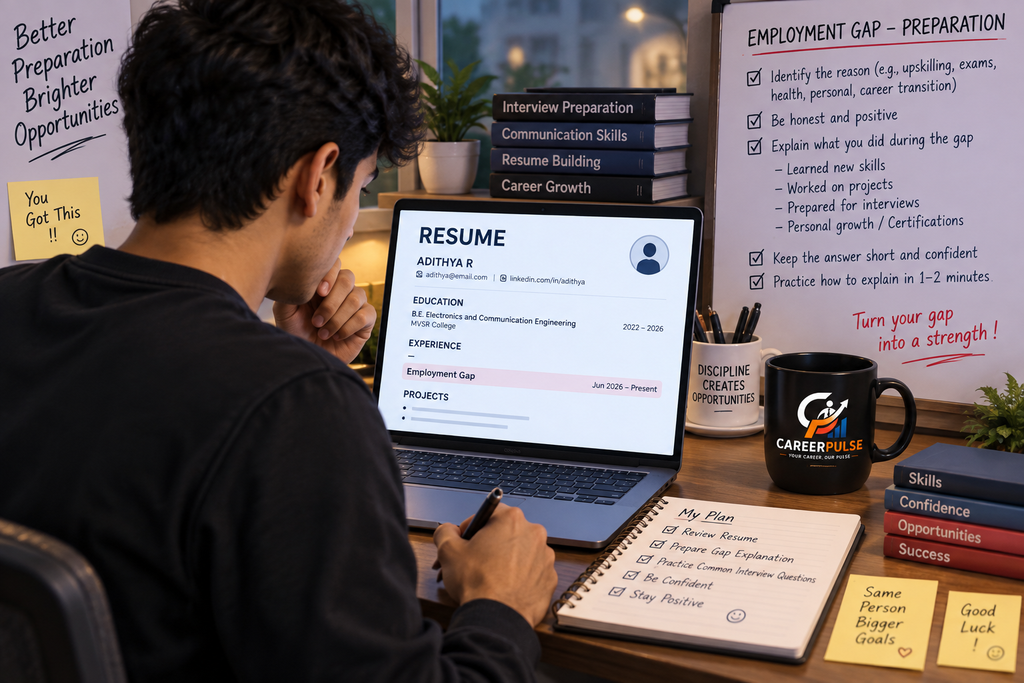
This guide covers the actual decision framework for whether your specific gap needs an explanation at all, the exact wording and format that works, a genuinely useful LinkedIn feature built specifically for this that most people don’t know exists, and how to handle the inevitable interview question without either apologizing or getting defensive.
Table of Contents
The Actual Rule for Whether You Need to Explain It
Rather than a single universal answer,Resume Employment Gap 2026 the consistent guidance across current career advice breaks down by length, and it’s worth internalizing these thresholds rather than guessing:
- Under 3 months: Generally no explanation needed at all. This falls within normal job-transition time, and most recruiters won’t think twice about it.
- 3 to 9 months: Worth considering a brief mention, particularly if this gap sits right before your most recent role and might otherwise look like it needs context.
- Over 9 months: Address it directly, either with a short line in your resume or a dedicated entry describing what you did during that time.
A useful rule of thumb that cuts through most of the ambiguity: if the gap is longer than the job you held immediately before it, address it. If it’s shorter, your actual work history generally speaks loudly enough that the gap doesn’t need separate justification.
Why “Hiding” a Gap Backfires More Than the Gap Itself
This is worth being direct about, since the instinct to minimize a gap through clever formatting is understandable but usually counterproductive. Listing your employment dates by year only (“2020–2022”) rather than by month specifically to obscure a gap is a commonly used trick — and it’s one that experienced recruiters recognize immediately, since it’s a well-known pattern at this point. Gaps that are clearly, honestly dated read as transparent; gaps that appear artificially compressed or hidden read as suspicious, precisely because the technique is so widely recognized. The better approach, even when it feels counterintuitive: use full month and year for your employment dates, and address the gap directly rather than trying to make it invisible.
The Exact Format That Works on the Resume Itself
Your resume is a marketing document, not a confession — the goal is a brief, factual line, not a paragraph of justification. A few concrete formats that work well:
- As a line beneath the preceding role: “Position eliminated as part of company-wide restructuring, March 2025.”
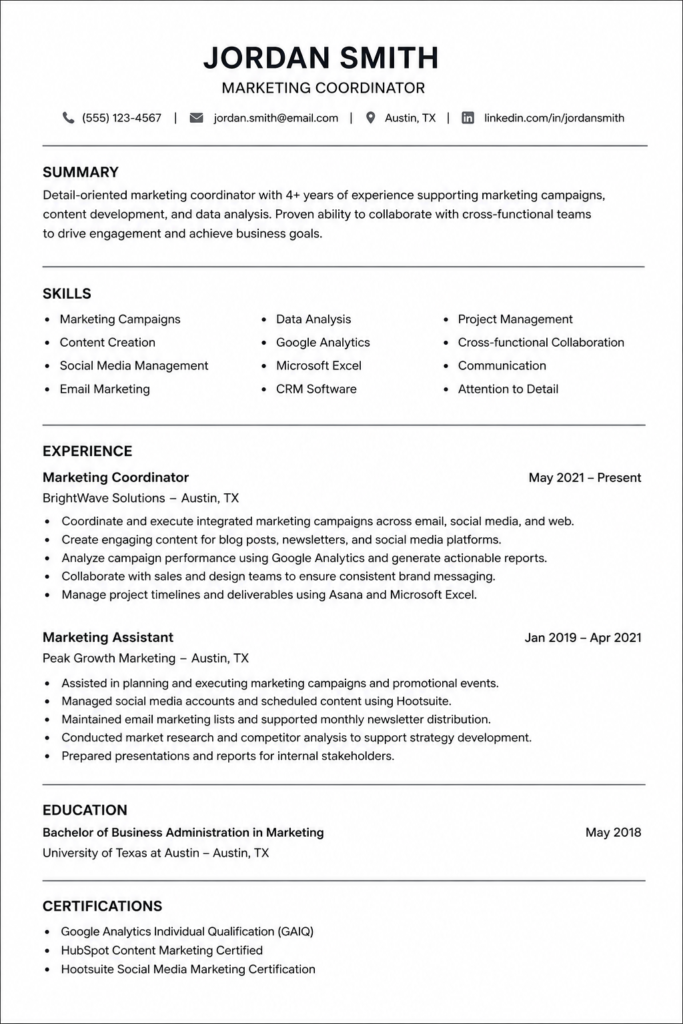
- As its own entry in your work history, treated like a role: “Career Break — Caregiving | January 2025 – August 2025” or “Professional Development & Freelancing | January 2025 – August 2025”
- As a brief note in your resume summary, if the gap is recent and you want to reassure a reader upfront that your skills remain current, before they even reach your chronological history
Whichever format you choose, keep it to a single line. The full context — what specifically you did, what you learned, why you’re ready now — belongs in your cover letter and interview, not spelled out in detail on the resume itself.
What to Actually Write, by Common Gap Type
Most employment gaps fall into a small number of recognizable categories, and each has a natural, non-defensive way to frame it:
- Layoff or restructuring: State it plainly and factually — “Role eliminated due to organizational restructuring” — with no further elaboration needed on the resume itself.
- Caregiving or family responsibility: “Career Break — Family Caregiving” is a complete, professional, and increasingly normalized framing that requires no further justification on the page.
- Health-related leave: A simple “Personal Leave” or “Health-Related Career Break” is sufficient; you’re not obligated to disclose specific medical details on a resume, and shouldn’t feel pressured to.
- Travel or sabbatical: Frame this around growth rather than just time off — “Independent Travel & Skill Development, Southeast Asia” reads considerably stronger than simply “Travel.”
- Further education or certification: This one largely speaks for itself — list the program, institution, and dates as you would any other credential.
- Extended job searching: If you were actively searching the whole time, “Active Job Search” is an honest, unremarkable framing — this is one of the most common reasons for a gap and rarely raises concern on its own.
The LinkedIn Feature Built Specifically for This
Here’s a detail worth knowing that a surprising number of job seekers miss entirely: LinkedIn has a dedicated “Career Break” feature, built directly into the platform’s experience section, specifically designed to let you categorize a gap rather than leave it as an unexplained blank space in your work history. You can classify it under categories including caregiving, health and wellbeing, travel, education, or a general “other” category, and this shows up as a normal, structured entry on your profile rather than an obvious hole in your timeline.
This directly complements the broader LinkedIn optimization approach covered elsewhere on this site — since a profile with an unexplained timeline gap can undercut even a well-optimized headline and About section, using this dedicated feature closes a genuine visibility gap most users don’t think to address, precisely because it’s a relatively underused feature buried a level deeper in the profile-editing experience than the more obvious headline and summary fields.
What ATS Software Actually Does With Gaps — Which Is Nothing
This connects directly to a broader myth worth clearing up: Applicant Tracking Systems parse resumes for keywords, skills, and formatting — they do not calculate or score employment gaps as a distinct factor. The gap itself only matters to the human reviewer reading your resume, not to the software processing it beforehand. Where a gap can indirectly affect your ATS performance is if it means your most recent, most keyword-relevant experience is now further in the past relative to the role you’re applying for — in which case tailoring your resume summary and skills section specifically to the current job posting becomes more important, not because the software is penalizing the gap directly, but because your keyword relevance may need reinforcing regardless of the reason.
Handling the Interview Question Without Apologizing or Over-Explaining
When the gap inevitably comes up in conversation, a simple three-part structure works consistently well: context, what you did, why you’re ready now. State briefly and factually what happened — a layoff, a caregiving responsibility, a deliberate break — without extended justification or apology. Follow with a genuine, specific example of what you did during that time, even if it wasn’t paid work: a certification completed, a skill maintained through freelance work, a specific personal circumstance resolved. Close by connecting directly to your readiness for this specific role now. The tone matters as much as the content — evasiveness or visible discomfort reads worse to an interviewer than the gap itself, since what’s actually being assessed in that moment is your self-awareness and composure under a mildly uncomfortable question, not just the factual content of your answer.
Never Do This, Regardless of How Long the Gap Is
One point is worth stating without qualification: never fabricate employment dates to disguise or eliminate a gap. If a background check or reference verification later reveals fabricated dates, this is legitimate grounds for a rescinded offer or termination even after you’ve been hired — a consequence considerably more severe than any discomfort involved in honestly explaining a real gap in the first place. Honesty about the gap itself is genuinely non-negotiable; how you frame and present that honest information is where you have real flexibility.
A Reassuring Piece of Context Worth Remembering
If your gap began within the past couple of years, it’s worth knowing you’re not navigating this in isolation — given the volume of layoffs, restructuring, and broader labour market disruption covered elsewhere on this site, millions of professionals share overlapping employment gaps from the exact same period, often for identical structural reasons entirely outside their individual control. Recruiters reviewing resumes during this same period are seeing this pattern repeatedly, which is precisely why the stigma has genuinely softened — a gap that might have stood out as unusual five years ago now reads as an unremarkable, expected feature of a resume from someone who’s been navigating a genuinely more volatile job market than existed a decade ago.
Building Your Explanation Around the Specific Role You’re Targeting
One detail worth adding to the standard advice above: whatever brief explanation you give for your gap, connect it — even loosely — to the role you’re actually applying for, rather than treating it as a generic, one-size-fits-all line reused across every application. If you spent a gap period doing freelance work tangentially related to your target role, name that specifically rather than using a generic “freelancing” label. If you used a health-related break to also complete a relevant certification, mention the certification alongside the break itself, since this reframes the period as one that included genuine professional development, not just an absence. This small adjustment costs little extra effort but meaningfully strengthens how the gap fits into your overall narrative for that specific application.
How This Plays Out Specifically in the Indian Job Market
While the broader guidance here applies fairly universally, a few specific considerations matter for job seekers navigating this in India specifically. Career gaps for competitive exam preparation — UPSC, state PSC exams, banking exams, and similar — are a genuinely common and well-understood reason for a gap in the Indian context, and framing this directly (“Preparing for [specific exam], [dates]”) is both honest and generally well-received, since Indian recruiters are broadly familiar with this pattern. Similarly, gaps tied to family responsibilities, particularly for women returning to the workforce after a career break, have seen growing acceptance alongside a genuine rise in “returnship” programs specifically designed by Indian companies to bring experienced professionals back into the workforce after an extended break — worth searching for specifically if this describes your situation, since these programs are explicitly built around the assumption of a gap rather than treating it as something to overcome.
Addressing the Gap in Your Cover Letter, If You Choose To
While the resume itself should stay brief, a cover letter offers more room to provide context if you feel it would genuinely strengthen your application — though this remains optional rather than mandatory. If you do address it there, keep the same principles in mind: state it factually, briefly, and pivot quickly toward your enthusiasm for the specific role and what you bring to it. A cover letter that spends several sentences justifying a gap before ever mentioning why you’re excited about the position risks leading with the wrong emphasis. A single sentence acknowledging the gap, followed by the bulk of your letter focused on genuine interest and relevant qualifications, generally strikes the right balance between transparency and keeping the focus where it belongs — on what you can actually contribute going forward.
How Different Career Stages Should Approach This Differently
The right approach to a gap also shifts depending on where you are in your career. Early-career professionals with a gap right after graduation or a first role are generally given more latitude, since employers understand that early career paths are rarely perfectly linear, and a gap here is often read as normal exploration rather than a red flag. Mid-career professionals with a gap after several years of established, consistent employment benefit most from clearly connecting their gap to a specific, understandable cause and demonstrating that their skills remain current despite the break. Senior professionals returning after a longer gap — sometimes several years for caregiving or health reasons — often find that leading with a strong, confident professional summary emphasizing their pre-gap seniority and any skill-maintenance activities during the break helps recruiters focus on demonstrated capability rather than solely on the length of time away.
What Recruiters Actually Report Looking For
It’s worth understanding what’s genuinely being assessed from the recruiter’s side of this conversation, since it reframes the whole exercise usefully. Recruiters aren’t primarily trying to catch or penalize a gap — they’re trying to answer two practical questions: are this candidate’s skills still current and relevant, and can they explain their own career story clearly and confidently. A gap addressed with specificity and confidence answers both questions favorably, regardless of the underlying reason. A gap left unexplained, or addressed with visible discomfort, leaves both questions unanswered, which is what actually drives hesitation — not the gap itself, but the uncertainty it creates about how you think about and communicate your own professional narrative. Understanding this shifts the goal from “minimizing how the gap looks” toward “demonstrating clear self-awareness and current capability,” which is a genuinely more achievable and more honest target to aim for.
A Final Word on Confidence Versus Content
Across everything covered in this guide, one thread runs through all of it: the specific wording matters less than the tone you bring to it. Two candidates can use nearly identical language to explain the same gap, and one will land considerably better than the other purely based on whether it’s delivered with genuine confidence and clarity or with visible hesitation and apology. This isn’t about performing false confidence you don’t feel — it comes more naturally once you’ve actually prepared your explanation in advance, written it down, and said it aloud a few times before you’re in an actual interview. The candidates who handle this best aren’t necessarily the ones with the most impressive gap activities to report — they’re the ones who’ve simply taken the time to think through their own story clearly enough that they’re not improvising an answer for the first time under the pressure of an actual interview.
Quick Answers
Do I need to explain a resume gap under three months?
Generally no — this falls within normal job-transition time and rarely raises concern on its own.
Should I use years-only formatting to hide a gap?
No, this is a widely recognized technique that tends to read as evasive rather than actually concealing anything from an experienced recruiter — use full month and year, and address the gap directly instead.
Does ATS software penalize resumes with employment gaps?
No, ATS systems parse for keywords and skills relevance, not employment timeline continuity — the gap only matters to the human reviewer, not the screening software.
What is LinkedIn’s Career Break feature?
A dedicated section within LinkedIn’s experience area that lets you categorize a career gap (caregiving, health, travel, education, or other) as a structured profile entry rather than leaving it as an unexplained blank space.
Is it okay to just say “Active Job Search” for a gap?
Yes, this is an honest, unremarkable, and very common explanation that rarely raises additional concern on its own.
What happens if I lie about my employment dates to hide a gap?
This can be grounds for a rescinded job offer or termination if discovered later, even after you’ve been hired — never fabricate dates regardless of how uncomfortable an honest gap feels.
How much detail should I put on the resume itself versus save for the interview?
Keep the resume to a single, brief, factual line; save the fuller context — what you did, what you learned, why you’re ready now — for your cover letter and interview conversation.
If you’re updating your resume to address a gap, it’s worth reviewing your LinkedIn profile alongside it using our guide on LinkedIn Profile Tips 2026, since a consistent, honest story across both documents — including using the Career Break feature specifically — presents a considerably stronger, more coherent narrative than addressing the gap on one platform while leaving it unexplained on the other, and recruiters increasingly cross-check both before deciding whether to move forward with a candidate.
Suggested Internal Links
- Resume Tips Category
- LinkedIn Profile Tips 2026: Old Advice Now Hurts You
- The 75% ATS Rejection Stat Is Fake: Here’s What’s Real
- Free ATS Resume Builder Tools 2026: 7 Tested
Suggested External References
- LinkedIn Talent Solutions Hiring Research: https://business.linkedin.com/talent-solutions
- Indeed Career Advice: https://www.indeed.com/career-advice
- National Career Service Portal (India): https://www.ncs.gov.in